

You know that feeling now, scrolling and seeing something so strange you just… stop. An animal with what looks like human teeth. A bird the size of a horse. A pink elephant. Your thumb hovers. Is that real? Did someone fake this? Nine times out of ten, you’re probably right to be suspicious — AI-generated wildlife photos have gotten scarily convincing, and half the internet is now basically a game of spot-the-fake.
But every so often, the answer is: no fakery here. It’s just… a real animal. One that’s been quietly doing its thing on this planet, completely unbothered by the fact that it looks like it escaped a sci-fi film. That’s what this list is. Seven animals so strange-looking you’d bet money they were AI. All seven are completely real. No filters, no prompts, no CGI — just evolution going a little off-script.
1. The Creature With the Perfect Tool for the Job
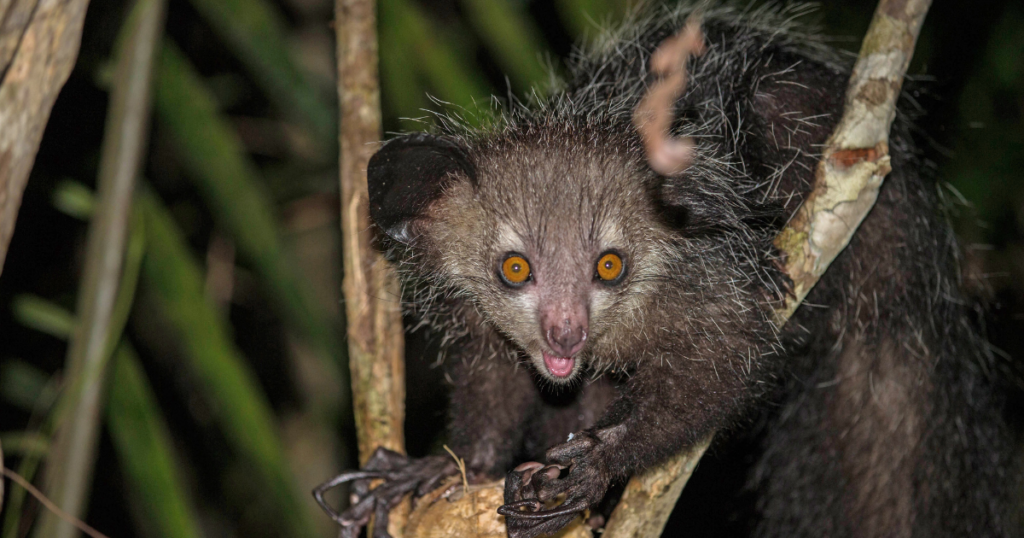
First look at an aye-aye and you’d be forgiven for thinking evolution lost the instructions halfway through. Its ears seem too big, its eyes too wide, its incisors never stop growing and then there’s that impossibly long middle finger that looks completely out of place. Except it isn’t.
Every odd feature solves a problem. Those oversized ears can hear insects moving beneath tree bark. Its powerful teeth gnaw through wood, and that strange finger slips into tiny tunnels to hook out grubs that few other animals can reach.
The aye-aye doesn’t look like a mistake. It looks like an animal that spent thousands of years becoming very good at surviving in its own way. While the rest of the forest competes for the same meals, the aye-aye quietly gets on with its own. In doing so, it carved out a niche in Madagascar that very few other animals can challenge.
2. The Nose Nobody Would Have Designed
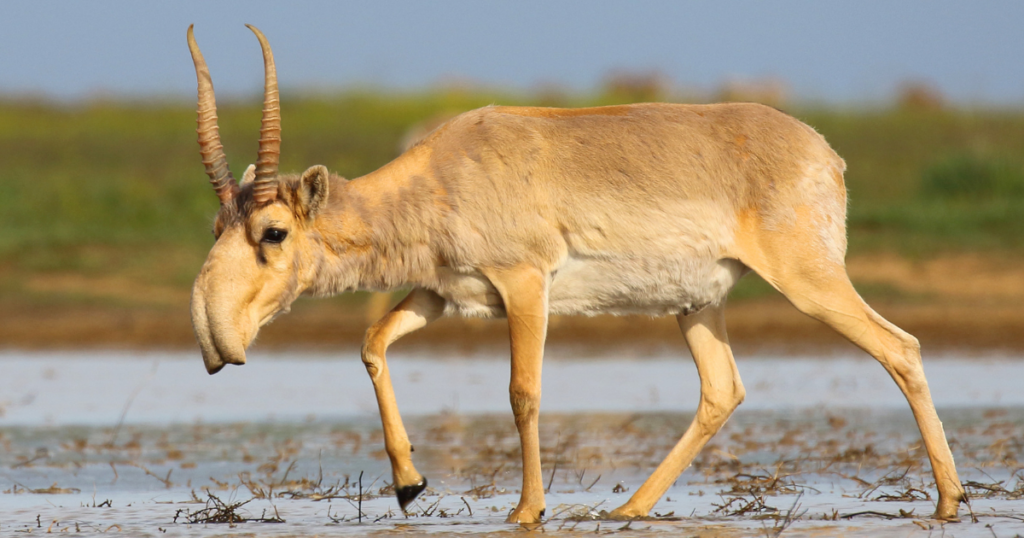
Ask someone to draw an antelope and chances are this isn’t what they’ll come up with. The saiga has a large, drooping nose that hangs over its mouth, giving it one of the strangest faces in the animal kingdom. Then you find out what that nose actually does.
As the saiga races across the dusty grasslands of Central Asia, its oversized nose filters dust before it reaches the lungs. When winter arrives, that same nose warms the freezing air before every breath. In summer, it helps cool and condition the air instead.
What looks awkward is actually one of the animal’s greatest survival tools. The longer you look, the less unusual it seems. Every curve has a purpose, shaped over thousands of years to help the saiga survive one of the harshest environments on Earth.
3. The Sea Creature That Disappears Without Moving
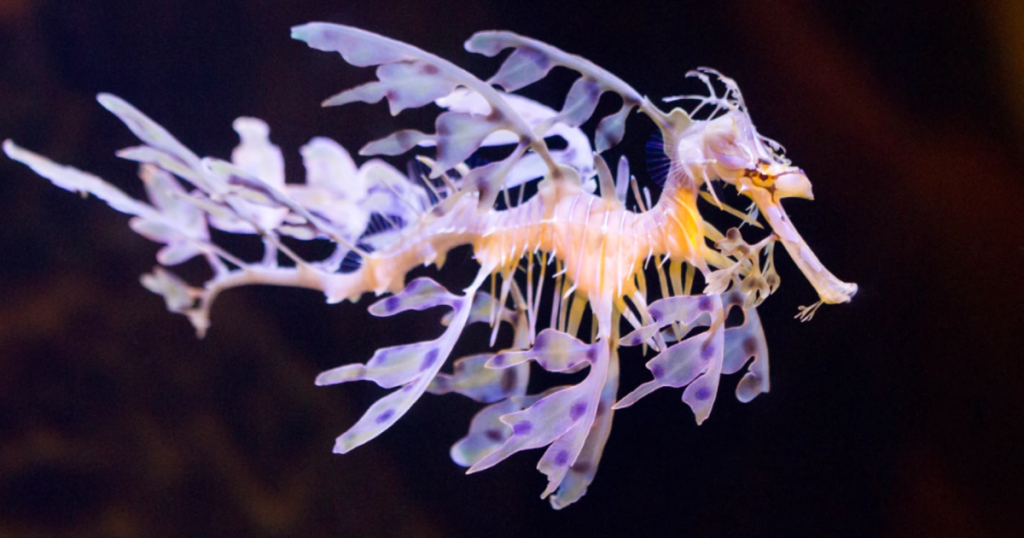
If seaweed ever dreamed of being an animal, it’d probably end up looking something like the leafy sea dragon. Found in the waters off southern Australia, it doesn’t rely on speed or strength to survive. Most of the time, it simply disappears.
Those delicate, leaf-like appendages aren’t used for swimming at all. They’re camouflage, helping the sea dragon blend so completely with drifting seaweed that predators often swim straight past without noticing it. The real work is done by tiny, almost invisible fins that gently carry it through the water.
It’s easy to mistake a leafy sea dragon for a piece of floating kelp. That’s exactly the point. Sometimes the smartest survival strategy isn’t to fight or outrun anything. It’s to become so convincing that nothing gives you a second glance.
As if that wasn’t unusual enough, the male takes on another remarkable role. Like his seahorse cousins, he carries the eggs attached beneath his tail until they’re ready to hatch, proving that the leafy sea dragon has more than one surprise tucked among its leaves.
4. The Animal That Looks Like Two Different Species Glued Together
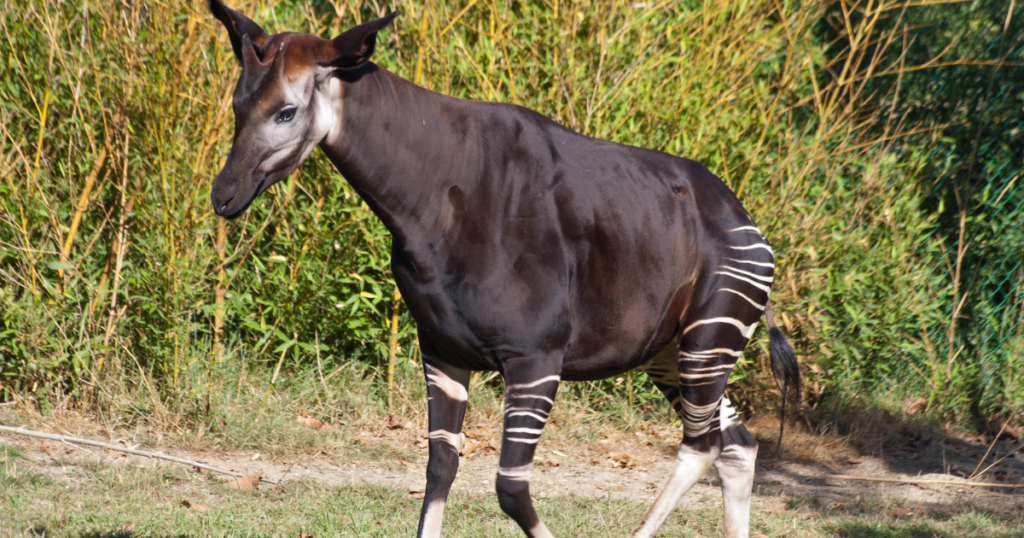
Try describing an okapi out loud. It has the body of a horse, the face of a giraffe and legs striped like a zebra. It sounds as though someone couldn’t decide which animal to finish drawing. Except it’s real.
The okapi lives deep in the rainforests of the Democratic Republic of the Congo and remained unknown to Western science until 1901, despite being well known to the people who shared its forest. It’s also the giraffe’s closest living relative, even if it doesn’t look much like one at first glance.
Those striking stripes aren’t there to stand out. They’re camouflage. As sunlight filters through the forest canopy, the bands break up the okapi’s outline, making it surprisingly difficult to spot among the shifting patches of light and shadow. Young calves even use those flashes of white to keep track of their mothers as they move quietly through the undergrowth.
The okapi doesn’t look like three different animals stitched together. It looks exactly like something shaped by the rainforest it calls home. Perhaps that’s why seeing one still feels less like spotting wildlife and more like discovering a secret.
5. The Deep-Sea Octopus Nobody Expected to Be This Cute
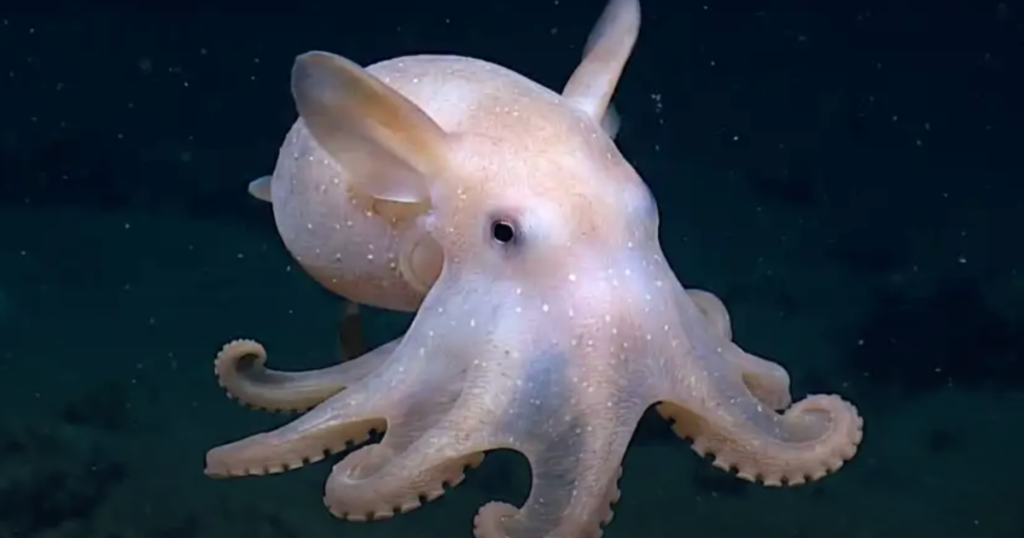
“Octopus” doesn’t usually make people think “adorable.” Then the dumbo octopus appears, gently flapping two ear-like fins above its head and looking more like something from a children’s story than an animal living thousands of metres beneath the ocean’s surface.
Down there, sunlight never reaches. The water hovers just above freezing, and the pressure is so immense it would crush most surface-dwelling animals. Yet this is exactly where the dumbo octopus belongs. Rather than jetting through the water like many of its relatives, it glides slowly with those distinctive fins, conserving energy as it searches the seabed for worms, crustaceans and other small prey.
It may look gentle, but there’s nothing fragile about it. Every part of the dumbo octopus is perfectly suited to a world that seems almost impossible to survive in.
6. The Tiny Boxer That Could Probably Knock You Out
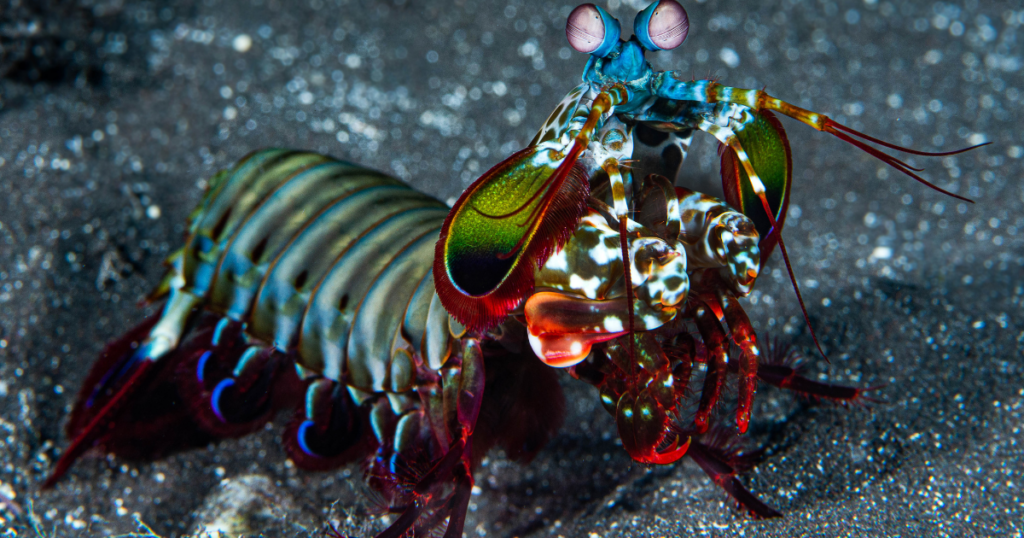
You could easily overlook a mantis shrimp. Most are no longer than your hand. But that would be a mistake. Its club-like strike is one of the fastest movements in the animal kingdom. The punch is so powerful that it creates tiny cavitation bubbles in the water. When those bubbles collapse, they release a second burst of force that’s strong enough to smash through shells and stun prey before the mantis shrimp even lands another blow.
Then there are the eyes. Humans see colour using three types of light-detecting cells. Depending on the species, mantis shrimp have up to sixteen. Scientists are still working out exactly how they process all that information because their vision seems to work very differently from our own.
For something so small, the mantis shrimp has an astonishing collection of superpowers. It’s a reminder that in nature, the most formidable creatures aren’t always the biggest.
7. The Animal That Never Really Grew Up
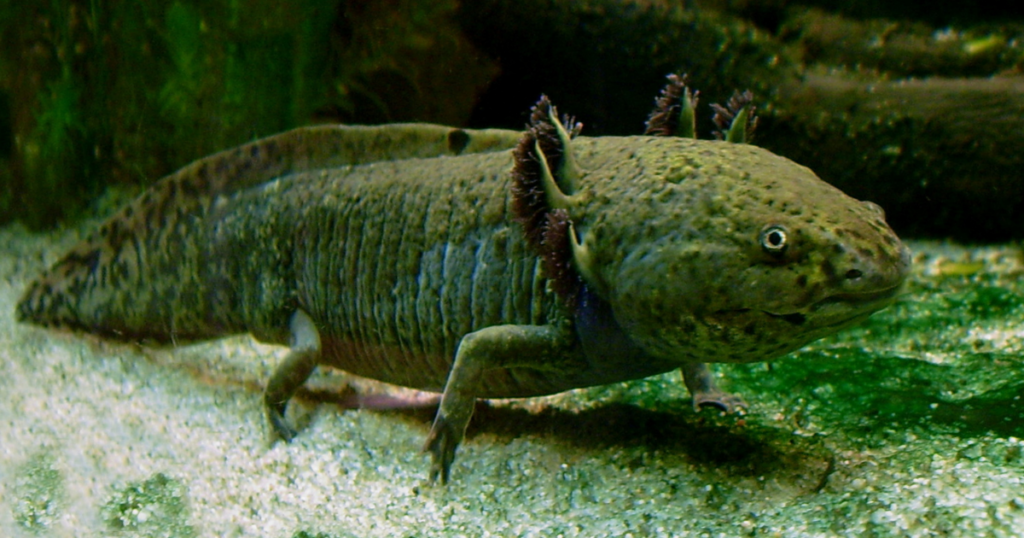
This probably isn’t the axolotl you were expecting. Most of us picture the smiling pink amphibian that’s become an internet favourite. In the wild, though, axolotls are usually much darker, their mottled brown and black colouring helping them disappear into the waterways of Xochimilco near Mexico City. As remarkable as they look, their appearance isn’t the biggest surprise.
Unlike most salamanders, axolotls never outgrow their juvenile stage. They spend their entire lives underwater, keeping the feathery external gills that make them so instantly recognisable. Then there’s their extraordinary ability to heal. An axolotl can regenerate lost limbs, parts of its heart, sections of its spinal cord and even areas of its brain without leaving the kind of scar tissue most animals would. It’s one of the reasons scientists have spent decades studying the species, hoping its remarkable biology might one day help unlock new treatments for people.
For all its fame, the wild axolotl is critically endangered. While millions of people recognise its smiling face, very few will ever see one where it truly belongs.
The World Is Stranger Than We Think
After meeting seven animals that look as though they wandered in from another universe, it’s tempting to think our planet is stranger than fiction. Maybe it is. Every one of these creatures looks unusual for the same reason: every feature has a purpose. The aye-aye’s finger, the saiga’s nose, the leafy sea dragon’s camouflage—they aren’t nature showing off. They’re solutions, shaped over thousands of years.
Perhaps that’s the real surprise. The world hasn’t become less extraordinary. We’ve simply forgotten how much there is to notice. So the next time you come across an animal that looks too strange to be real, take a second look. There’s a good chance reality is far more imaginative than anything we could have invented.
🪶 Dive into this next: Faith Was Never Meant to be Lonely