

Every so often, history delivers a discovery so extraordinary that it seems to rewrite everything we thought we knew. A missing link between humans and apes. A giant turned to stone beneath an ordinary farm. Tiny fairies dancing through an English garden. Strange creatures living on the Moon. For a brief moment, each of these stories captured imaginations and convinced the world that the impossible had become possible.
Some attracted crowds of curious visitors. Others divided scientists, inspired bestselling books, or filled newspaper columns around the globe. Although each one was eventually exposed as a hoax, they continue to fascinate us … they remind us that reality is stranger than fiction. Here are five of history’s most remarkable hoaxes, and the extraordinary stories behind them.
The Piltdown Man: The Fossil That Rewrote Human History
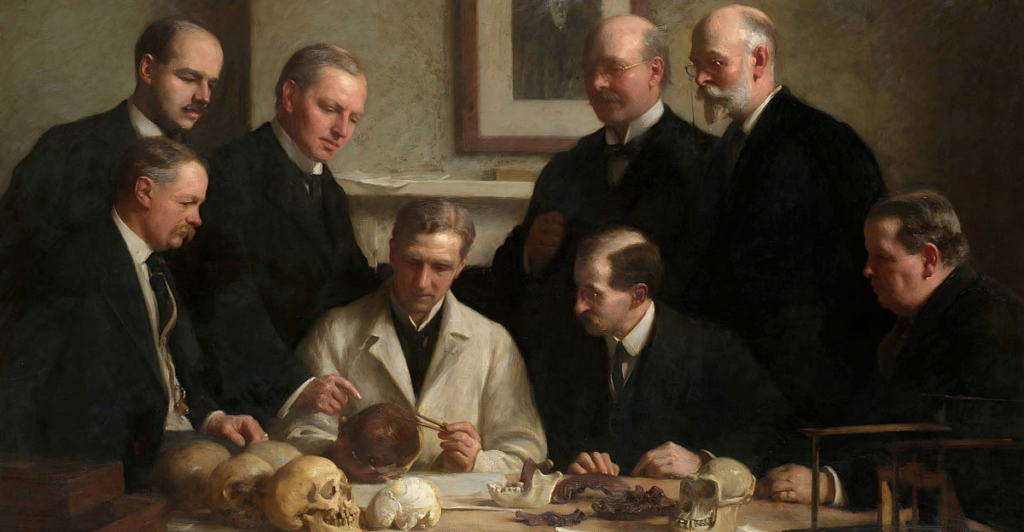
In 1912, workers digging through gravel near the village of Piltdown in southern England uncovered what appeared to be one of the most important scientific discoveries of the century. Fragments of a human-like skull and an ape-like jawbone seemed to reveal the long-sought “missing link” between ancient apes and modern humans. At a time when scientists were racing to understand human evolution, the discovery appeared to place England at the centre of humanity’s story.
For more than 40 years, Piltdown Man appeared in textbooks, museums and scientific discussions around the world. Then science caught up with the fossil. By the early 1950s, new dating techniques revealed an uncomfortable truth … the skull belonged to a relatively recent human, and the jaw belonged to an orangutan. The teeth had been deliberately filed down to make them appear more human, while the bones had been chemically stained to look ancient.
The identity of the hoaxer remains debated, although Charles Dawson, the amateur archaeologist who announced the discovery, is widely considered the most likely culprit.
The Cardiff Giant: America’s Stone Giant
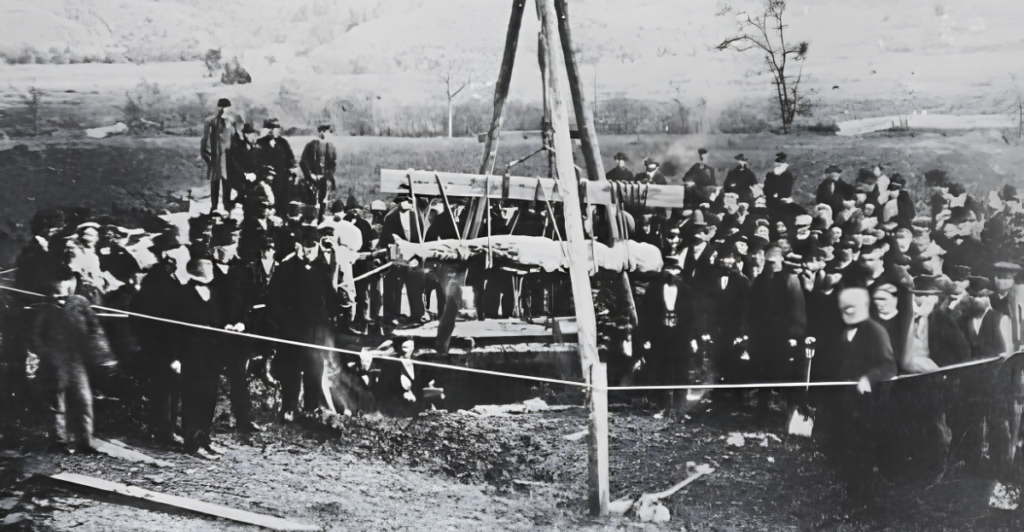
Imagine walking across your farm one morning and uncovering the petrified body of a ten-foot-tall giant. That is exactly what workers claimed to have discovered in Cardiff, New York, in October 1869. Word spread quickly. Thousands of people travelled to see the enormous figure, convinced they were looking at something that could change history. Some believed it was proof that biblical giants had once walked the Earth. Others saw the remains of a forgotten civilisation.
It was an extraordinary discovery. Just not in the way anyone imagined.
The giant had never spent centuries buried beneath the field. Businessman George Hull had commissioned a ten-foot figure carved from a massive block of gypsum, stained and weathered it to appear ancient, then secretly buried it on a relative’s farm. Nearly a year later, workers “discovered” exactly what they had been meant to find. Hull later admitted the entire spectacle had been an elaborate practical joke—one that attracted thousands of visitors and became one of history’s most famous hoaxes.
The Cottingley Fairies: When Fairytales Looked Real

In the summer of 1917, two young cousins from the English village of Cottingley returned home with photographs that appeared to show them surrounded by delicate winged fairies. The images were unlike anything people had seen before. The figures danced among flowers, hovered beside the girls and seemed astonishingly lifelike for the time.
During an era still recovering from the First World War, stories of wonder and hope found a ready audience. The photographs spread rapidly. Perhaps the most famous believer was Sir Arthur Conan Doyle, creator of Sherlock Holmes. Convinced the images were genuine, he published articles defending them and argued they offered evidence of a hidden spiritual world.
For decades, the photographs remained one of history’s greatest mysteries. Finally, in the 1980s, the cousins admitted that four of the five photographs had been staged using carefully drawn paper cut-outs held in place with hatpins. Only the fifth image, they insisted, remained unexplained, a claim that continues to intrigue some enthusiasts today. Whether or not anyone accepts that final photograph, the Cottingley Fairies remain one of the most enchanting hoaxes ever created.
The Great Moon Hoax: Life Beyond Earth… in the Morning Newspaper
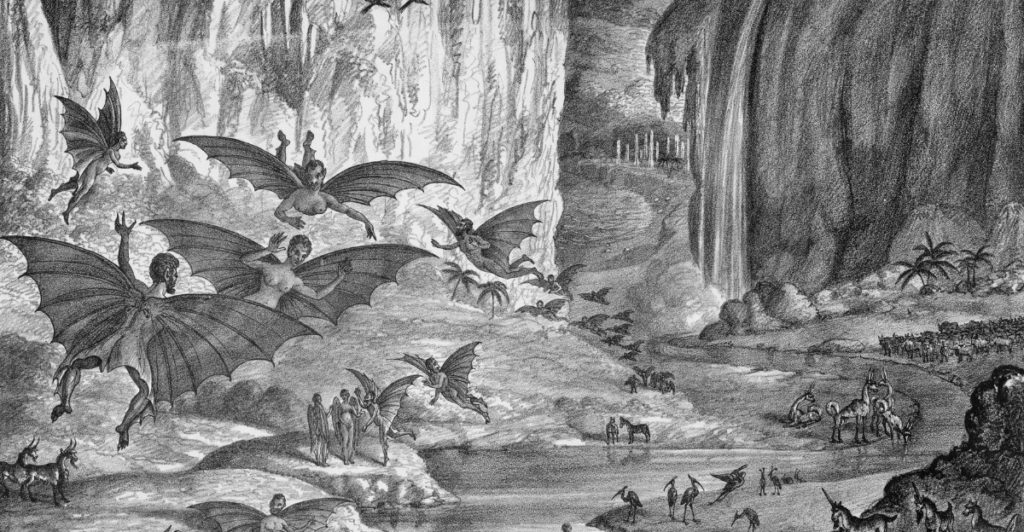
Long before the internet, a newspaper could still make the world believe the impossible. In August 1835, readers of The New York Sun were treated to an astonishing series of reports claiming that renowned astronomer Sir John Herschel had made breathtaking discoveries using an enormous new telescope in South Africa. According to the articles, the Moon was anything but barren. It supposedly contained forests, sparkling beaches, strange blue unicorn-like creatures, giant beavers that walked upright, and even winged humanoids. People couldn’t get enough.
The newspaper’s circulation soared as readers eagerly awaited each new instalment. Eventually, it became clear that the entire story had been fabricated by journalist Richard Adams Locke as a satire on sensational scientific reporting. Yet by then, the hoax had become one of the greatest publishing successes of the nineteenth century. For a few unforgettable weeks, humanity believed the Moon was alive.
The Kensington Runestone: A Viking Mystery That Refuses to Fade
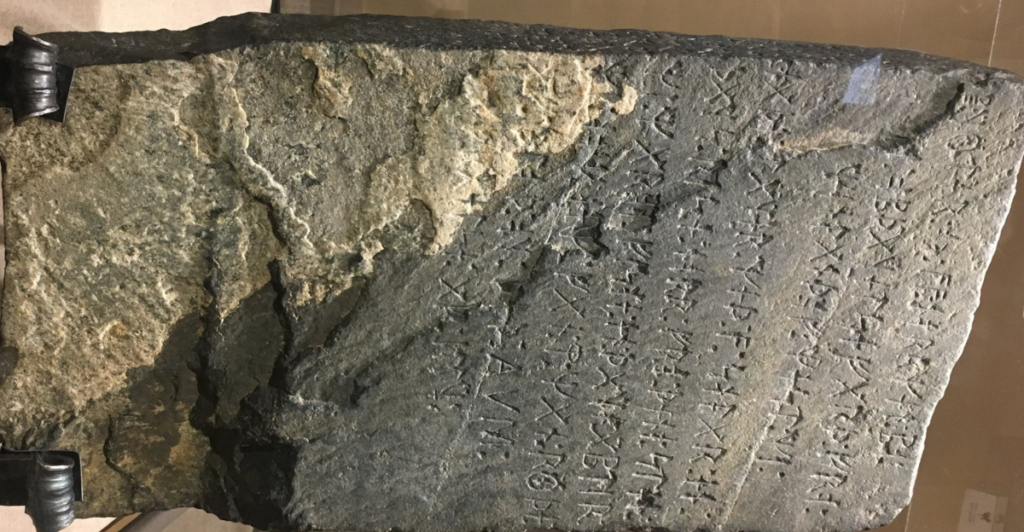
In 1898, Swedish-American farmer Olof Öhman claimed to have unearthed a heavy stone tangled among the roots of a tree in rural Minnesota. Its surface was covered in mysterious runes. The inscription appeared to describe a group of Scandinavian explorers travelling through North America in 1362, more than a century before Christopher Columbus crossed the Atlantic. If authentic, the stone would dramatically reshape part of North American history.
Scholars soon began studying the inscription. Many concluded that the language, grammar and rune forms were inconsistent with genuine medieval Scandinavian writing, leading most experts to regard the runestone as a modern creation. Yet the debate has never entirely disappeared.
Unlike many famous hoaxes that ended with a confession, the Kensington Runestone continues to occupy a curious space between legend and history, drawing visitors and inspiring fresh discussion more than a century after its discovery.
Why These Stories Still Captivate Us
History is filled with genuine wonders. Ancient cities emerge from deserts. Shipwrecks are found beneath the sea. Fossils reveal creatures stranger than anything a novelist could imagine. Perhaps that is why these hoaxes have endured. Each one borrowed just enough truth to make the impossible seem tantalisingly close. They invited people to imagine giants beneath their feet, forgotten ancestors waiting to be discovered, tiny fairies hiding among the flowers, or entire civilisations living on the Moon.
The stories themselves may have been invented, but the curiosity they sparked was real. Perhaps that is their greatest legacy. Long after the hoaxes were exposed, they continued to send people down the same irresistible rabbit holes—searching old photographs, reading forgotten newspaper reports, visiting museums, and wondering what extraordinary discovery history might reveal next.
🪶 Dive into this next: Nothing in God’s Design Is Random