

If you grew up in South Africa before bank cards, phone payments and self-checkouts became part of everyday life, you’ll probably remember the old banknotes. They passed through your hands so often that you stopped noticing the portrait altogether.
Your parents bought groceries with those notes. They paid for petrol on family holidays, slipped them into church collection bags and folded them into birthday cards with a handwritten message tucked inside. Children counted them over and over again on bedroom floors, convinced they were only a few rand away from finally buying something they’d wanted for months. Through thousands of ordinary moments, one face quietly became part of everyday life.
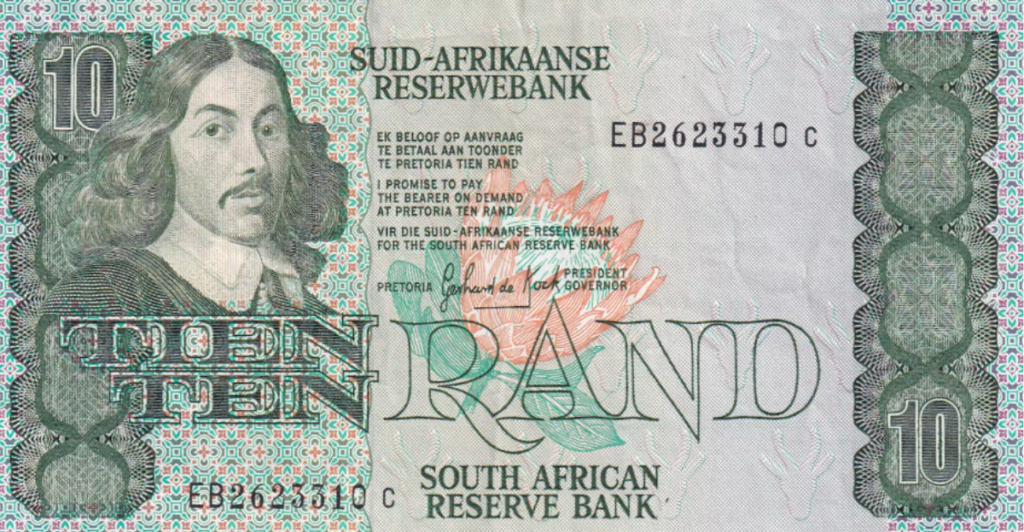
Every January, countless schoolchildren covered new textbooks with brown paper before writing their names neatly on the front. Somewhere between the chapters on the Dutch East India Company and the arrival at the Cape was the same familiar portrait. Months later, as exams crept closer, those same pages were underlined, highlighted and read again, usually the night before a test when dates, names and ships blurred together and everyone promised themselves they’d start studying earlier next time.
Teachers pointed to the portrait without hesitation. Museums displayed it without explanation. Statues gave it shape in bronze. Eventually, the portrait stopped looking like an old painting altogether. It was simply Jan van Riebeeck. None of us realised we were trusting a museum label written on the other side of the world.
It came from the Rijksmuseum in Amsterdam, one of the most respected museums in the world. Every trusted source seemed to tell the same story. The Rijksmuseum identified the portrait. Historians repeated it. Publishers printed it. Governments placed it on South African banknotes. By then, the portrait had travelled through wallets, classrooms and generations without anyone stopping to ask the simplest question of all.
History lessons taught us when Jan van Riebeeck arrived at the Cape. We learnt about the Drommedaris, the Reijger and the Goede Hoop. We memorised dates, places and events. Yet one question never seemed to come up. Not once did anyone stop and ask how we knew the man in the portrait was Jan van Riebeeck in the first place.
It’s the sort of question that sounds obvious once someone asks it. Yet for decades, almost nobody did. The portrait had been repeated for so long that the label beneath it became almost invisible. It appeared in so many books and museums that almost nobody thought to ask where the identification had come from.
In the early 1980s, a Dutch genealogist named F.G.L.O. van Kretschmar found himself following the history of the painting rather than the man in it. He wasn’t investigating Jan van Riebeeck at all. He was tracing ownership records, family documents, estate inventories and auction catalogues to see where the portrait had been and who had owned it over the centuries.
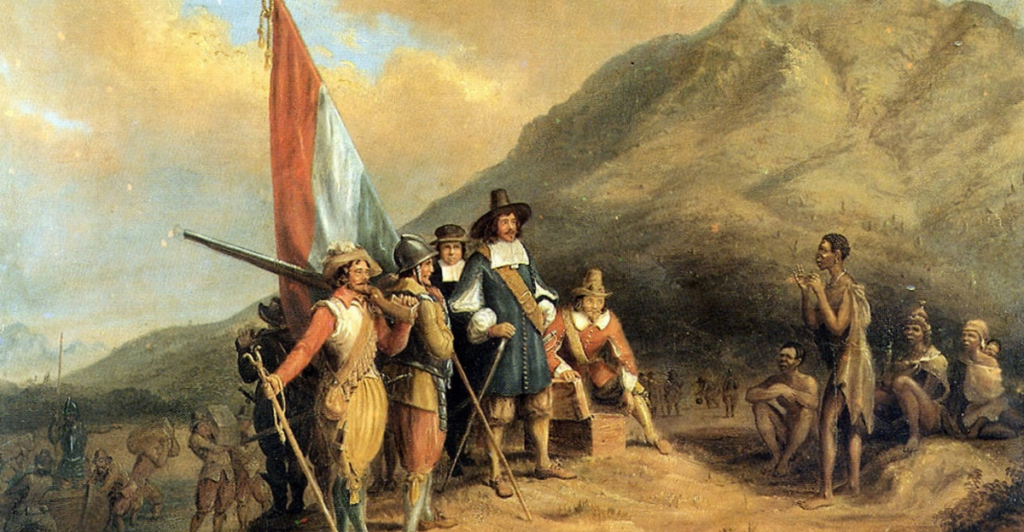
His days were spent reading estate inventories, family records, wills and auction catalogues, following the portrait from one owner to the next. Every old document seemed to bring him one step closer to an answer. If the painting really was Jan van Riebeeck, the paperwork would eventually lead him there.
The further Van Kretschmar followed the documents, the harder it became to understand why the portrait had ever been identified as Jan van Riebeeck. The ownership records refused to tell the story everyone expected. Some pointed towards another Dutch family. Others failed to support the name that had been accepted for generations. Every document that should have settled the question seemed to open another one instead.
At first, nothing seemed particularly unusual. One ownership record didn’t quite fit. Then another. A family connection pointed somewhere unexpected. Dates refused to line up as neatly as they should have. None of those details proved the portrait was wrong on their own, but taken together they became increasingly difficult to explain away.
History didn’t lose a portrait. It lost a name. Today the painting still hangs in the Rijksmuseum. Thousands of visitors walk past it every year, just as they always have. The face hasn’t changed since it appeared on South African banknotes or in the history books so many of us grew up with. Only the label has changed.
Where generations once believed they were looking at Jan van Riebeeck, the museum now identifies the painting with three unremarkable words: Portrait of a Man. That’s it. After travelling through wallets, classrooms and museums for generations, one of the most familiar faces in South African history no longer has a name.