

Someone sent me an article with the subject line, You need to try this. I clicked on it expecting another skincare routine or a supplement I’d never heard of. Instead, I found a wellness trend called silent walking. The idea was simple enough. Leave your headphones at home. Put your phone away. Walk without music, podcasts or audiobooks. People in the comments were calling it life-changing. One woman wrote that it had taken her three weeks to make it past ten minutes without reaching for her phone.
I read it twice because I honestly thought I’d missed something. I hadn’t. That was the trend.
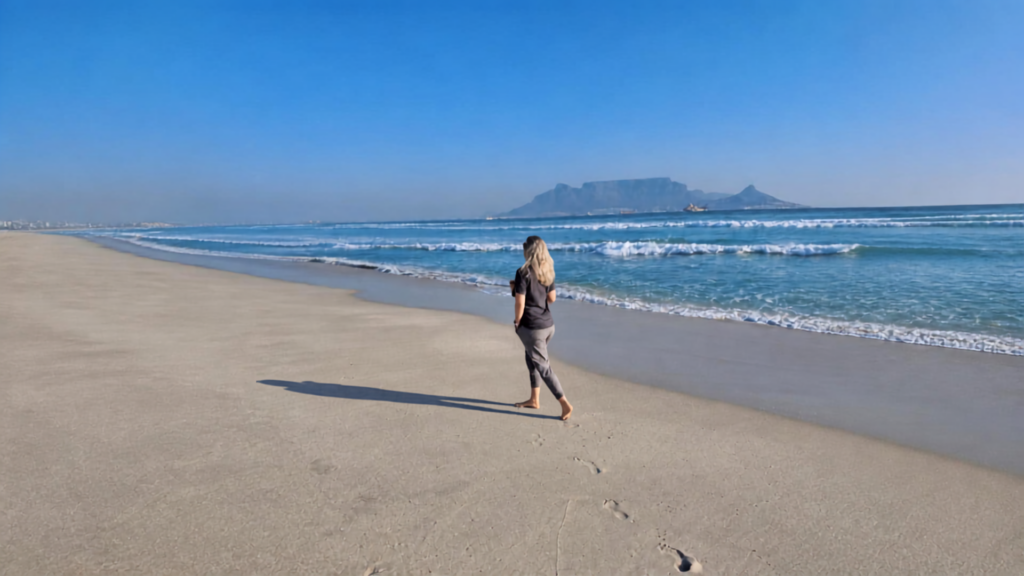
I kept coming back to the same thought. Is this really unusual? Until I read that article, I’d never stopped to consider there might be another way to go for a walk. I assumed everyone spent at least part of the time alone with their own thoughts. Apparently not. I don’t walk to clear my head. I don’t head out hoping for a breakthrough or trying to be more mindful. I simply enjoy being on my own. I enjoy the quiet. Always have.
Although “quiet” probably isn’t the right word. My walks have never felt silent.
My mind rarely stays still for long anyway. Sometimes all it takes is a strange feather on the pavement or a mushroom pushing through a tree stump after rain. Other times nothing prompts it at all. I’ll be walking along quite happily when my brain suddenly asks why we call it a pineapple when it isn’t a pine, and it isn’t an apple. Or why birds somehow know where they’re going every year without a map. Or whether fish ever get thirsty. I have no idea where these thoughts come from. They simply arrive, one after another, and I’ve long since stopped trying to stop them.
It usually ends the same way. I get home intending to look up one thing. Twenty browser tabs later, I’m reading about something I never expected to find. One question becomes another, then another. Sometimes I don’t even remember where I started. That’s always been one of my favourite ways to spend an afternoon. Maybe that’s why silent walking never sounded revolutionary to me. My walks have never been silent. They’ve always been full of questions.
The article itself didn’t stay with me for very long. The comments did.
“I only lasted ten minutes.”
“I kept reaching for my phone.”
“I didn’t realise silence made me this uncomfortable.”
Those weren’t complaints. They felt more like confessions.

That was the moment I stopped thinking about the trend and started wondering about us. When did being alone with our own thoughts become difficult? Ava has known the answer to one question for years.
“Mom, I’m bored.”
“What is boredom?”
“A sign of laziness.”
Every single time.
She knows I won’t rescue her from boredom. I won’t hand her a list of things to do or become her entertainment committee. She has to figure it out. She’ll disappear and before long she’s baking something, drawing, crocheting, reading or teaching herself something neither of us knew that morning.
I’ve never believed boredom is the problem. Staying there is. Maybe that’s because I’ve always thought boredom and curiosity are standing in the same doorway. One takes a step backwards. The other walks through. That made me curious enough to see if anyone had actually studied what happens when our minds are left alone. They have.
Neuroscientists talk about something called the Default Mode Network. It’s a network in the brain that becomes active when we’re not focused on a specific task. Walking. Daydreaming. Looking out of a window. Folding laundry. During those quiet moments, the brain starts organising memories, making unexpected connections and solving problems in the background. Researchers think it’s one reason our best ideas often arrive in the shower or halfway through a walk instead of while we’re sitting at a desk trying desperately to think of them.
Our brains aren’t doing nothing. They’re doing something different. Then I wondered whether I was imagining the rest of it. I wasn’t. One recent survey found people check their phones around 205 times a day. I tried to picture that. We fill the queue at the supermarket. We fill the kettle boiling. We fill the walk from the car to the front door. We fill the few quiet minutes before someone arrives. We’ve become remarkably good at making sure there’s never any space left.
I’m not pretending I’m different. I’ll answer messages while making coffee. I’ll look up the weather and somehow end up reading about moon phases or why mushrooms seem to appear overnight after rain. Technology isn’t the enemy. Half the things I know have started with an internet search. But I’ve noticed something. There’s a difference between curiosity and distraction.
Curiosity usually begins with a question. Distraction usually begins with a reflex. One leaves me knowing a little more about the world than I did an hour ago. The other leaves me wondering why I picked up my phone in the first place. I still find it strange that something I’ve quietly loved for years suddenly has a name. Not because I think silent walking is silly. I think it’s wonderful if people are rediscovering the pleasure of leaving the noise behind.
I can’t stop wondering what changed. When did a quiet walk become a wellness trend instead of an ordinary part of life? When did we decide every empty moment needed filling? When did silence become something we had to relearn instead of something we lived with? I don’t know.
I’ll probably head out for another walk later. I’ll notice something small that I’ve never seen before. My mind will wander somewhere unexpected. I’ll come home with another twenty browser tabs open because one question became ten. I will most likely need to message my friend just so that I do not feel left alone with these nagging thoughts.
I have a feeling I’ll still be thinking about that woman who couldn’t make it past ten minutes later tonight. Not because she reached for her phone. Because I wonder how many of us have forgotten that our own thoughts can be interesting company.
🪶 Dive into this next: 8 Places Where Rare Genes Became Surprisingly Common

[…] 🪶 Dive into this next: Why Does Silent Walking Need a Name? […]